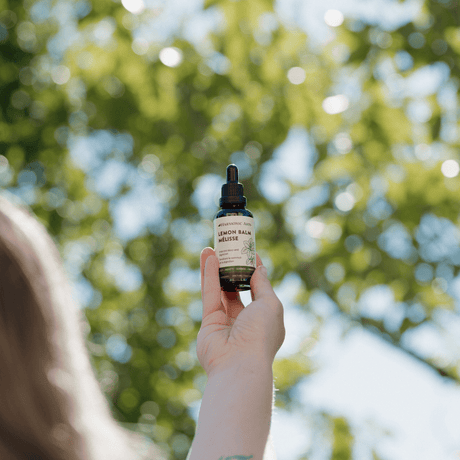
Every herb, mushroom and cacao bean has a story that begins long before it reaches your cupboard. It starts with a seed, a patch of soil, a forest floor, and the people who tend them through every season. As a clinical herbalist, I have spent years learning what plants can do for us. Through my work with the Sustainable Herbs Initiative, I spend my time asking what we can offer them in return.
I'm Angela Willard, co-founder and CEO of Harmonic Arts, and a dedicated member of the Sustainable Herbs Initiative (SHI). In this post, I want to share why SHI's work matters so much to me, how it has shaped the way we source at Harmonic Arts, and why we are donating 1% of profits from our Green Friday sale to SHI through 1% for the Planet.
What Is the Sustainable Herbs Initiative?
The Sustainable Herbs Initiative is a community dedicated to understanding the full story of each plant used in herbal medicine, learning where it comes from, and the people and places that tend to it. It brings together brands, growers, harvesters, suppliers and herbalists who want to build more integrity into how botanicals are sourced.
What drew me in, and what I believe is SHI's most important role, is that it asks the questions that matter. Three questions sit at the heart of its work:
- What becomes possible when we move from extraction to reciprocity?
- What becomes possible when we move from short-term thinking to long-term care?
- What becomes possible when we move from isolation to connection?
These questions invite essential curiosity from everyone in the herbal community, including customers, supply chains, sourcing partners, and brands like ours. These questions don't come with a checklist or a finish line; they come with an invitation to keep looking closer.
My Path as a Committed SHI Member
Starting with curiosity
I first came across the Sustainable Herbs Initiative online, and was struck by its deep commitment to understanding each plant's story, seeing it as a living part of being connected to land, people, and tradition.
I signed up for one of SHI's online courses, which then led me to join an in-person Learning Journey. There I found a community that stays endlessly curious while holding itself to high standards of integrity in how plant medicine is sourced. To me, that combination feels rare, and it is an important aspect of what our industry needs.
Why I sit on the Stewardship Council
Today I serve on SHI's Stewardship Council. Each month, I meet with fellow council members to:
- Review SHI's projects and overall strategy
- Explore new opportunities for SHI to create impact across the herbal industry
- Discuss practical tools that help SHI members build integrity into their own sourcing practices
Serving on the Stewardship Council is meaningful to me because it's a way I can offer support to this organization that shapes the future of an industry I care deeply about. Exploring new ways for SHI to create impact gives me a chance to contribute beyond my own business and to give back to a community that has taught me so much.
What I Learn in the Places Herbs Are Grown
One of the most formative experiences with this organization is experiencing an SHI Learning Journey. Walking the fields and speaking directly with the farmers is both inspiring and eye-opening.
We learn about the lives of people who have committed themselves to growing herbal medicine, and see just how much work and how many resources it takes to grow herbs sustainably.
Holding a jar of dried herbs or a bottle of tincture, it is hard to realize all that goes into it getting there. Experiencing being in the farm fields, or pristine wild lands of wildcrafted plants, imprints profoundly what the plants, people, and place from where they come share. Growing and harvesting herbs well takes an immense amount of care: for the plants, for the people who tend them, and for the land they grow on.
Such experiences change how I think about value in our industry. When a sustainably grown herb costs more, that price often reflects real care, fair pay and healthy soil. I believe those inputs are well worth paying for.
How SHI Shapes Sourcing at Harmonic Arts
SHI has given us a clearer map for how to keep digging deeper and improving. Its research, frameworks, industry connections and conversations help us see where we can make positive change. Here are two examples of what that looks like in practice.
Case study: a transparent medicinal mushroom supply chain
Medicinal mushrooms are at the heart of what we offer, so we've worked hard to build a supply chain we can stand behind, from cultivation to finished product. That work includes:
- Seeing it firsthand. We've visited the farms and facilities in our mushroom supply chain to understand how our mushrooms are cultivated, processed, and extracted, and to confirm they meet our standards.
- Independent third-party testing. We test for pesticide residues, heavy metals, and other contaminants, so every product meets rigorous standards for purity and safety.
- Long-term supplier relationships. We choose lasting partnerships over one-off purchases, because trust and quality grow over time.
- Traceability from source to shelf. We keep clear records of where our mushrooms come from and how they're handled at each stage, so we can trace our products back to their origin.
We believe that truly sustainable herbal medicine means caring for the people, the plants and the ecosystems behind every product.
Case study: honouring heritage with Arriba Nacional cacao
For our chocolate products, we intentionally source Arriba Nacional, a heritage variety of cacao grown in Ecuador with deep cultural and historical roots. We value it for its ancestral genetics, its rich flavour and its connection to the land where it has been cultivated for generations.
By sourcing cacao grown in its native environment, where the microclimate and soil support its natural characteristics, we aim to honour the integrity of the plant, preserve its genetic heritage and support traditional growing practices. Choosing ingredients in a way that sustains the plant and its people is reciprocity in action.
Why Asking the Right Questions Matters More Than Having Perfect Answers
Something I've come to understand is that we are all in this journey together. I don't believe that any brand has sustainable sourcing completely figured out. Supply chains are complex, and every plant has its own challenges. What matters is not where you are on the journey. What matters is that the questions are being asked, and that the trail they reveal is followed.
When we follow that trail honestly, we discover where we can make an impact with what we have to work with. Sometimes that means changing a supplier. Sometimes it means visiting a farm, paying more for a better-grown herb, or investing in testing. Every step counts.
Questions you can ask as a customer
You don't need to be a herbalist or an industry insider to be part of this. Customers have real influence, and curiosity is where it starts. The next time you buy an herbal product, consider asking:
- Where was this plant grown or harvested?
- What is the relationship the brand has to its source?
- Is the product independently tested for contaminants?
- Is the plant cultivated, or wild-harvested in a way that protects wild populations?
Brands that take sourcing seriously will welcome these questions.
Green Friday: Shop With Purpose, November 24 to 30
Instead of Black Friday, we celebrate Green Friday. From November 24 to 30, everything on our site is 20% off, and 1% of profits from the sale will be donated to the Sustainable Herbs Initiative through 1% for the Planet.
Harmonic Arts is a proud member of 1% for the Planet, a global network of businesses committed to giving back to environmental causes. You can see the impact of our past giving in our 2025 Impact Report.
Directing this year's Green Friday donation to SHI feels like a natural fit. SHI's work strengthens the entire herbal supply chain, from the farmers and harvesters to the brands and the people who rely on plant medicine every day. Your support helps SHI keep asking the questions that matter and keep building the tools that help our industry answer them.
When you shop our Green Friday sale, you are stocking up on the herbs, mushrooms and chocolate you love, and you are also helping move the herbal world from extraction to reciprocity, from short-term thinking to long-term care, and from isolation to connection.